Designing a Unified AI & ML-Powered Machine Vision Platform for Automated Quality Inspection
A unified desktop application that combines machine learning, machine vision development, AI-assisted workflow creation, deployment, monitoring, and production control into one modern experience.
Project Overview
The idea for this project came from a simple frustration I observed while exploring machine vision software used in manufacturing environments. Inspecting products on a production line had become incredibly advanced. Cameras could detect tiny defects, AI models could classify anomalies, and robotic systems could automatically remove defective products from the conveyor. Yet the software used to build and manage these systems felt disconnected, complex, and difficult to learn. Users often had to move between multiple applications to configure cameras, create inspection workflows, train AI models, deploy solutions, and monitor production. Each tool solved a specific problem, but together they created a fragmented experience that slowed teams down and increased the learning curve for new users. I wanted to explore what would happen if the entire machine learning, industrial automation and machine vision journey lived in a single platform. The result was a unified desktop application that combines machine vision development, AI-assisted workflow creation, deployment, monitoring, and production control into one modern experience. The platform helps manufacturers identify damaged products moving along a conveyor belt, classify defects using AI-powered cameras, and automatically communicate those decisions to robotic systems that remove defective items before they reach packaging. More importantly, it transforms a highly technical process into something that feels approachable, guided, and efficient.
My Role in the Project
I led the end-to-end product design effort, from discovery and workflow analysis to information architecture, interaction design, visual design, and prototyping. My focus was not only on consolidating functionality but also on redesigning the overall user experience. The existing workflows were powerful but visually dense, difficult to navigate, and intimidating for new users. I worked to simplify complex engineering tasks through clearer navigation, role-based experiences, AI-assisted workflows, and a modern interface that reduced cognitive load while preserving the flexibility required by advanced users. The project involved close collaboration with engineers, AI specialists, automation experts, and product stakeholders to ensure the platform balanced technical depth with usability.
Challenges Encountered
Users relied on multiple applications to complete a single inspection project.
Existing interfaces exposed too much complexity too early.
New users struggled to understand where to begin.
Traditional machine vision and AI workflows were disconnected.
Engineers needed advanced control while operators needed simplicity.
Troubleshooting production issues often required navigating several tools.
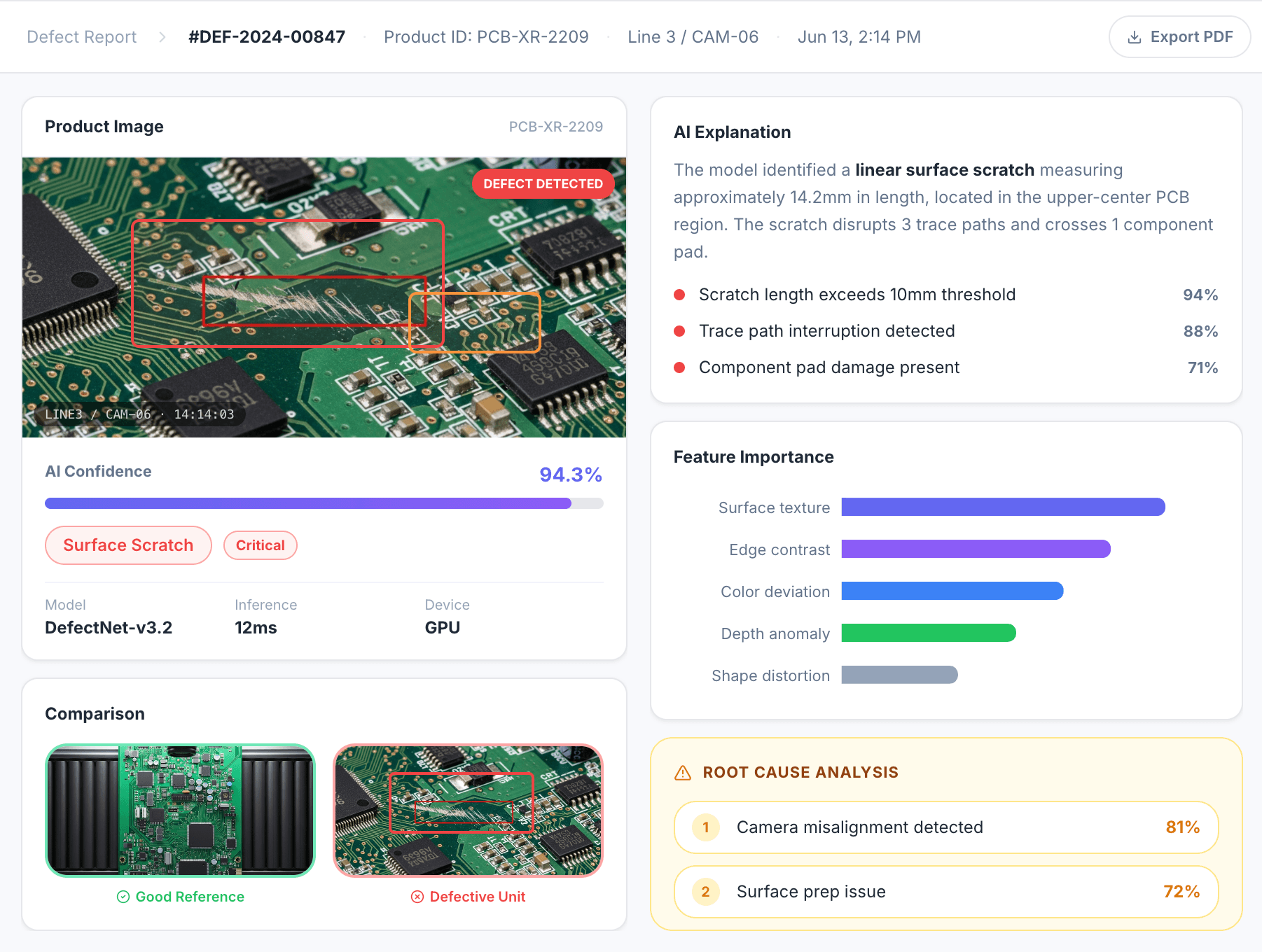
AI models lacked transparency, making users hesitant to trust results.
Real-time communication between cameras, scanners, PLCs, and robotic systems had to remain reliable.
Large amounts of technical information created visual clutter and cognitive overload.
User Research Approach & Insights
To understand the problem beyond the software itself, I focused on the complete inspection lifecycle. I studied how teams configured cameras, built inspection workflows, trained AI models, validated results, and maintained production systems. I paid close attention not only to what users were doing but also to where they became frustrated, confused, or forced to leave their current task. One insight stood out immediately. Users rarely talked about machine vision tools or AI algorithms. Instead, they talked about outcomes. They wanted to identify defects faster. Reduce false rejects. Keep production running. Improve quality. Minimize downtime. This shifted my design approach from building around technical features to building around user goals. Another important discovery was that many users needed guidance. Even experienced engineers spent time searching for the right tools, selecting AI models, and tuning parameters. This revealed an opportunity to use AI not just for inspection but also as an assistant throughout the entire workflow.
Methods
- Stakeholder interviews
- Workflow analysis
- Contextual inquiry
- User journey mapping
- Competitive analysis
- Task decomposition
- Concept exploration
- Interactive prototyping
- Iterative design reviews
- Expert feedback sessions
Key Findings
- Most inspection workflows follow repeatable patterns.
- Users care about outcomes more than underlying technology.
- Engineers want control, while operators want simplicity.
- The biggest productivity issue was switching between different tools.
- AI can reduce setup time when used as a guide rather than an automation replacement.
- Users trust AI more when they can understand why a decision was made.
- Visual clutter was a major usability issue in existing systems.
- A cleaner, more focused interface could improve adoption without sacrificing functionality.
- Role-based experiences would help support users with different levels of expertise.
Ideation Process
The project started as an effort to simplify workflow creation. However, as I mapped the user journey, it became clear that the bigger challenge was not a specific feature or screen. The problem was the overall experience. Users were constantly moving between different tools, different interfaces, and different mental models. I began exploring how a unified platform could reduce that complexity. Several concepts focused on workflow creation, but the most promising direction emerged when I introduced AI as a collaborative assistant rather than simply another feature. Instead of asking users to manually build everything from scratch, the system could understand intent, recommend solutions, explain decisions, and help users move faster. At the same time, I redesigned the visual language of the application. Dense engineering interfaces were replaced with a cleaner layout, improved hierarchy, simplified navigation, modern dashboards, and contextual panels that reveal information only when needed. The goal was to make the platform feel approachable without limiting its power.
The Solution Implemented
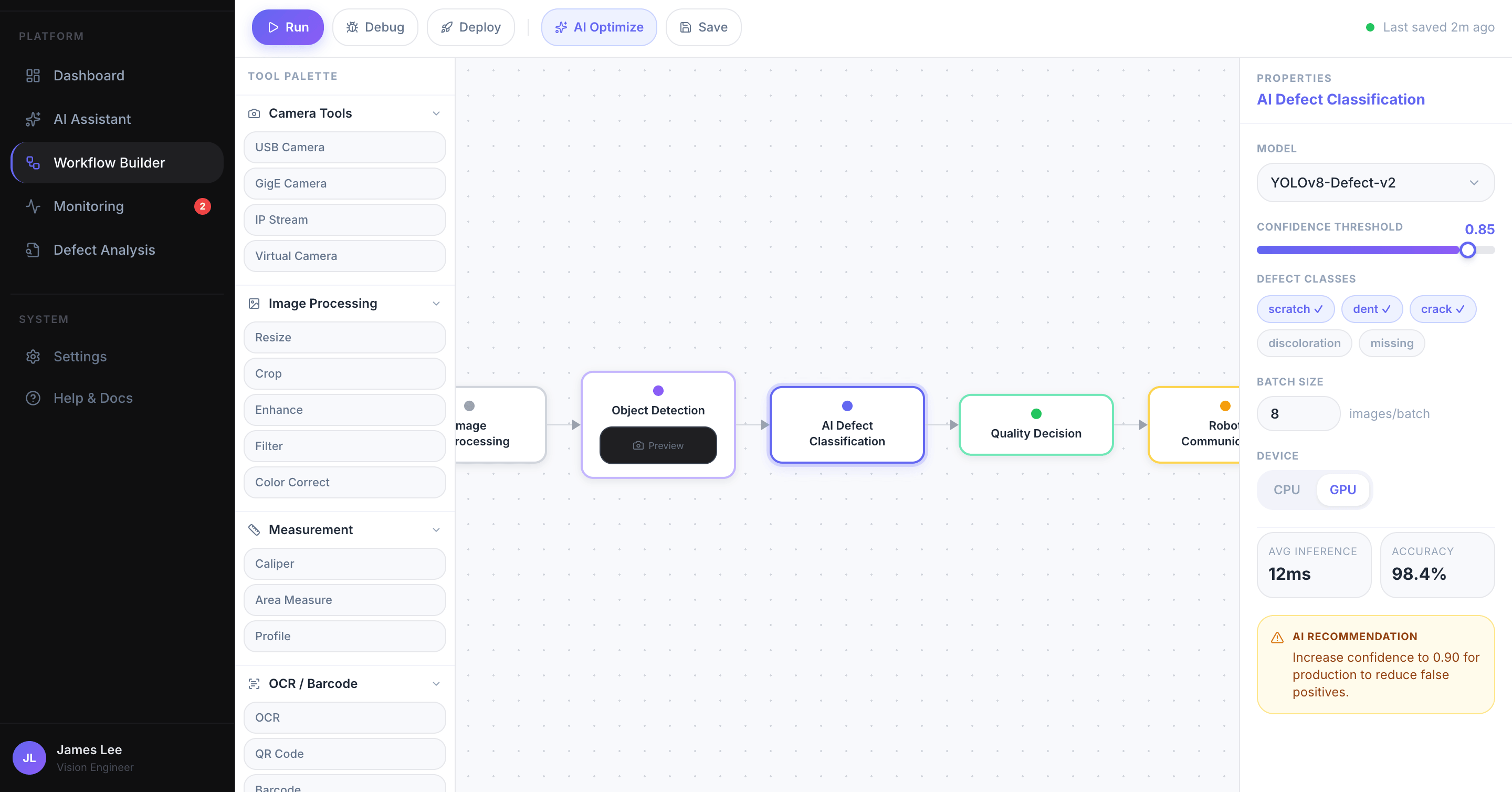
I designed a single unified desktop application that consolidates multiple previously fragmented tools into one modern, cohesive platform for the entire machine vision workflow.
Core Capabilities
- Visual drag-and-drop workflow builder
- Camera & scanner configuration
- Traditional machine vision tools
- AI model management
- Deployment management & robotic system integration
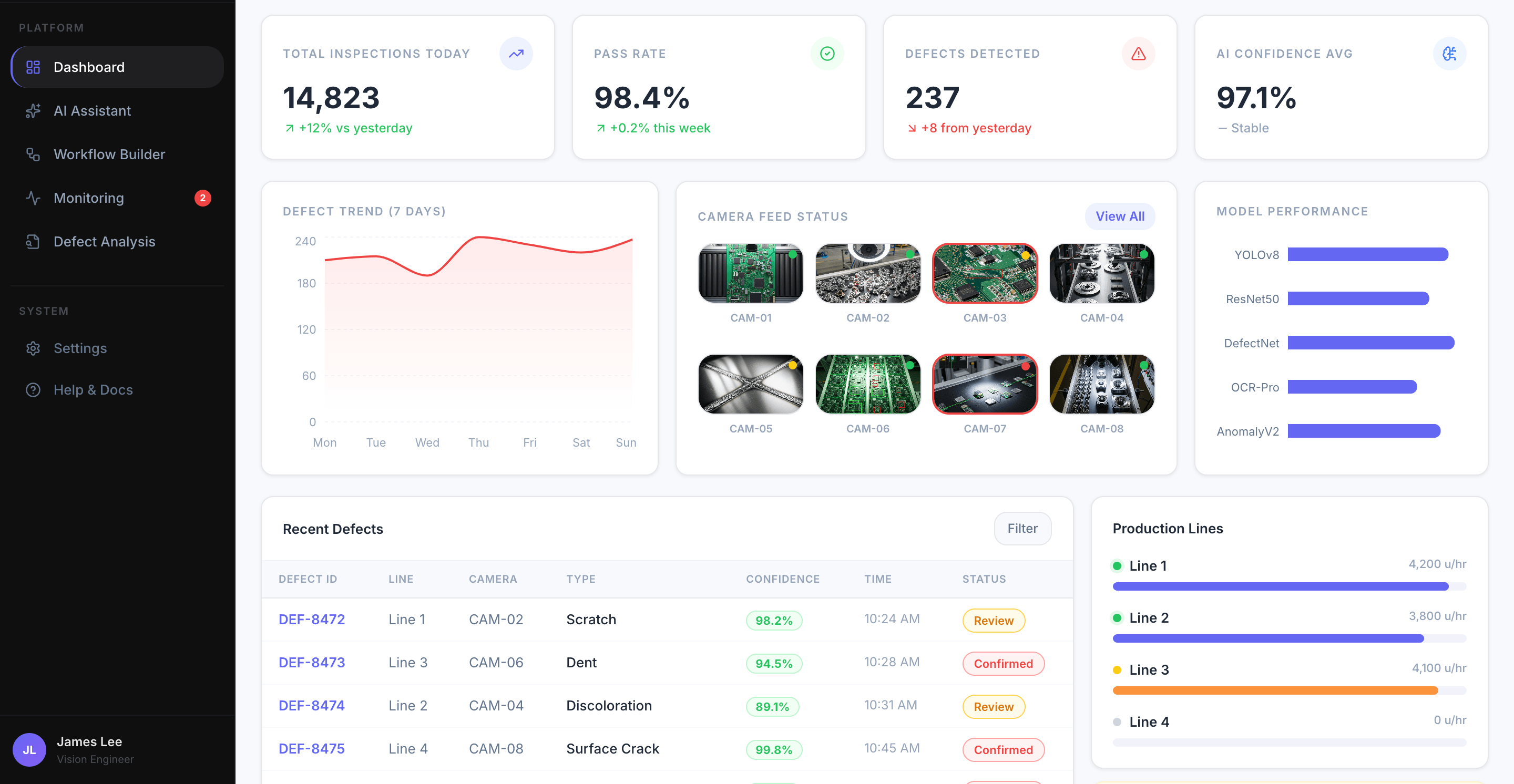
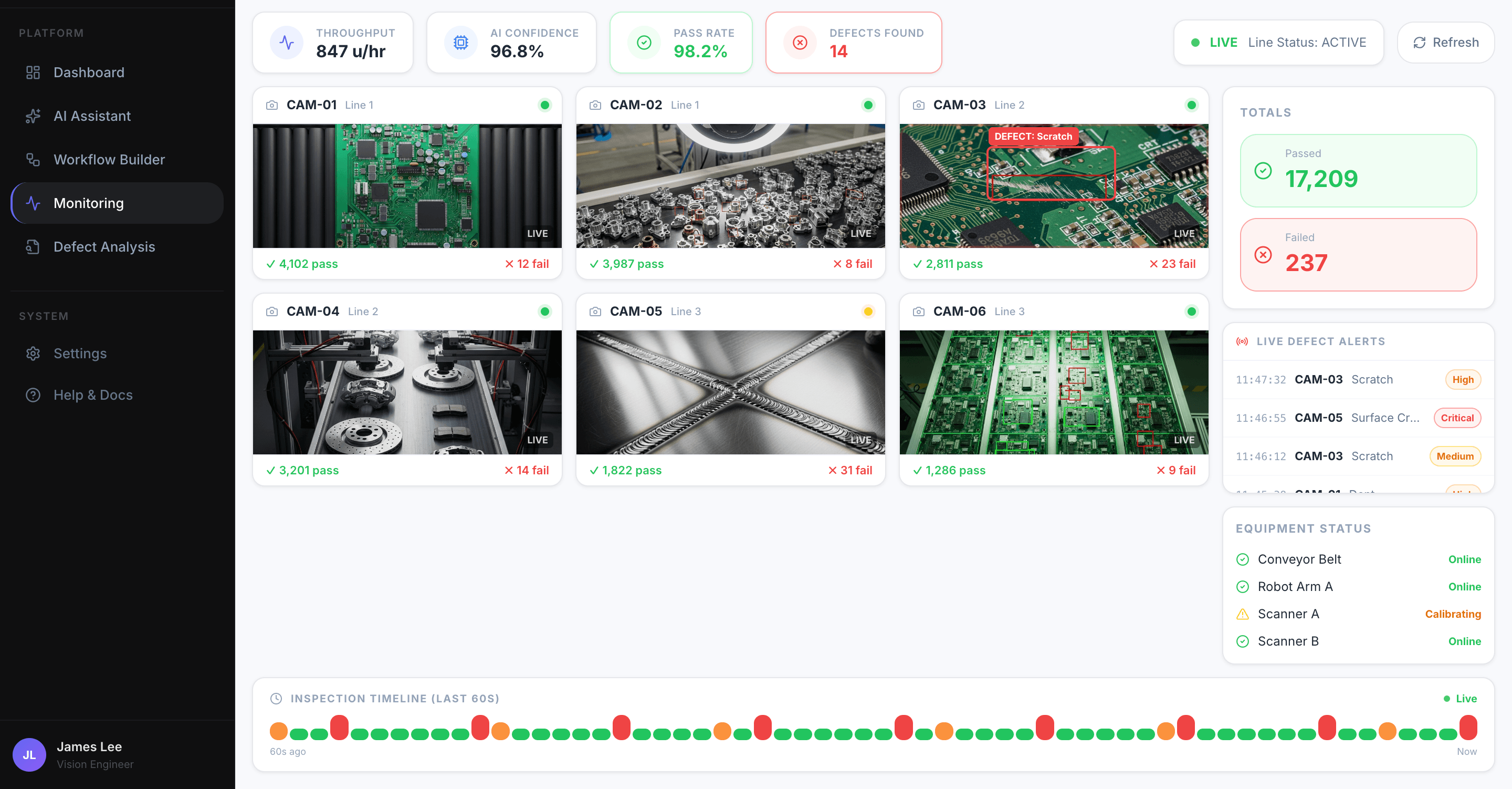
- Real-time inspection monitoring with multi-camera viewing
- Production dashboards and integrated debugging tools
- Role-based workspaces with guided project templates
AI-Powered Capabilities
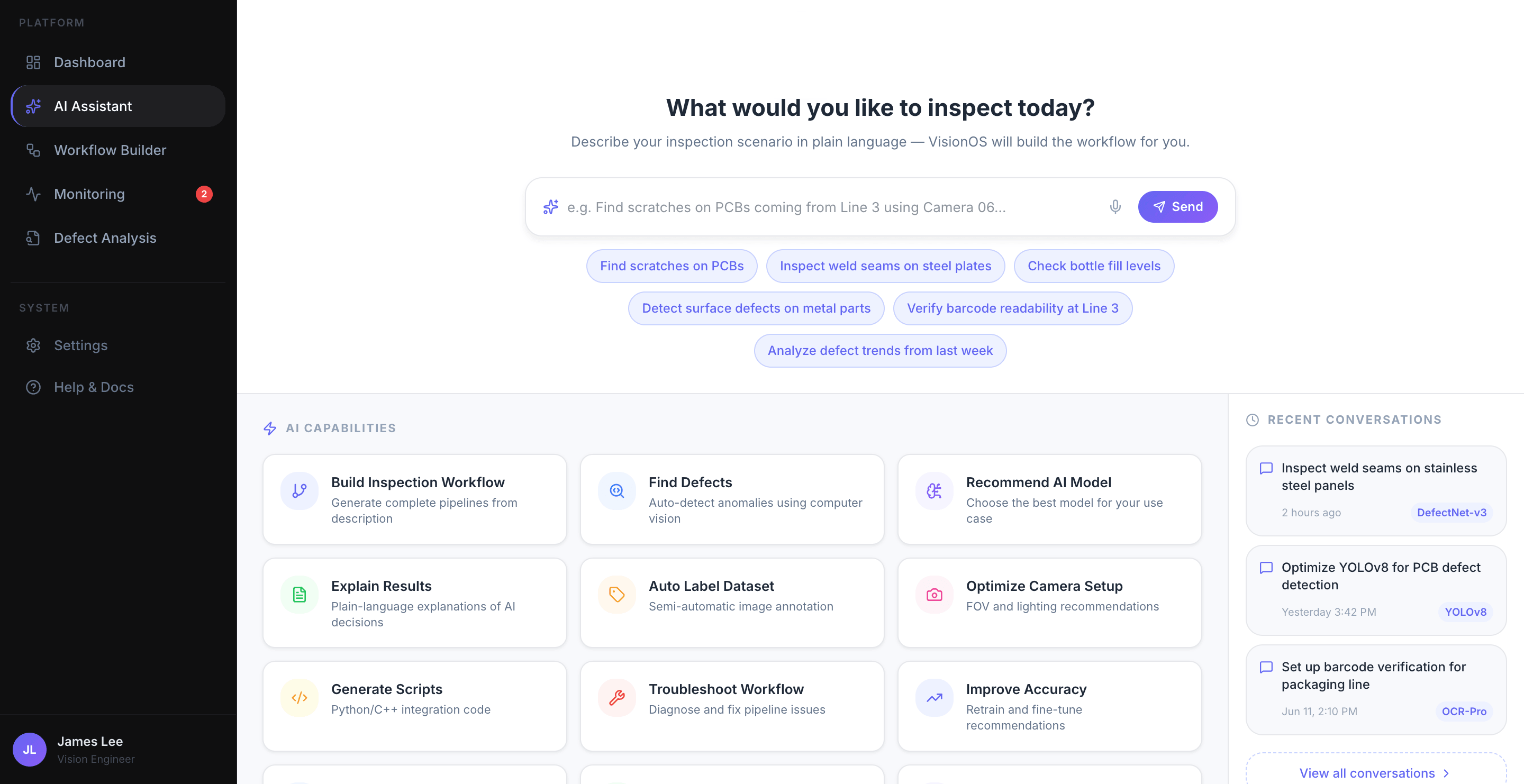
- Natural language workflow generation
- AI-assisted project setup and smart tool recommendations
- AI model recommendations based on inspection goals
- Dataset labeling assistance and parameter optimization
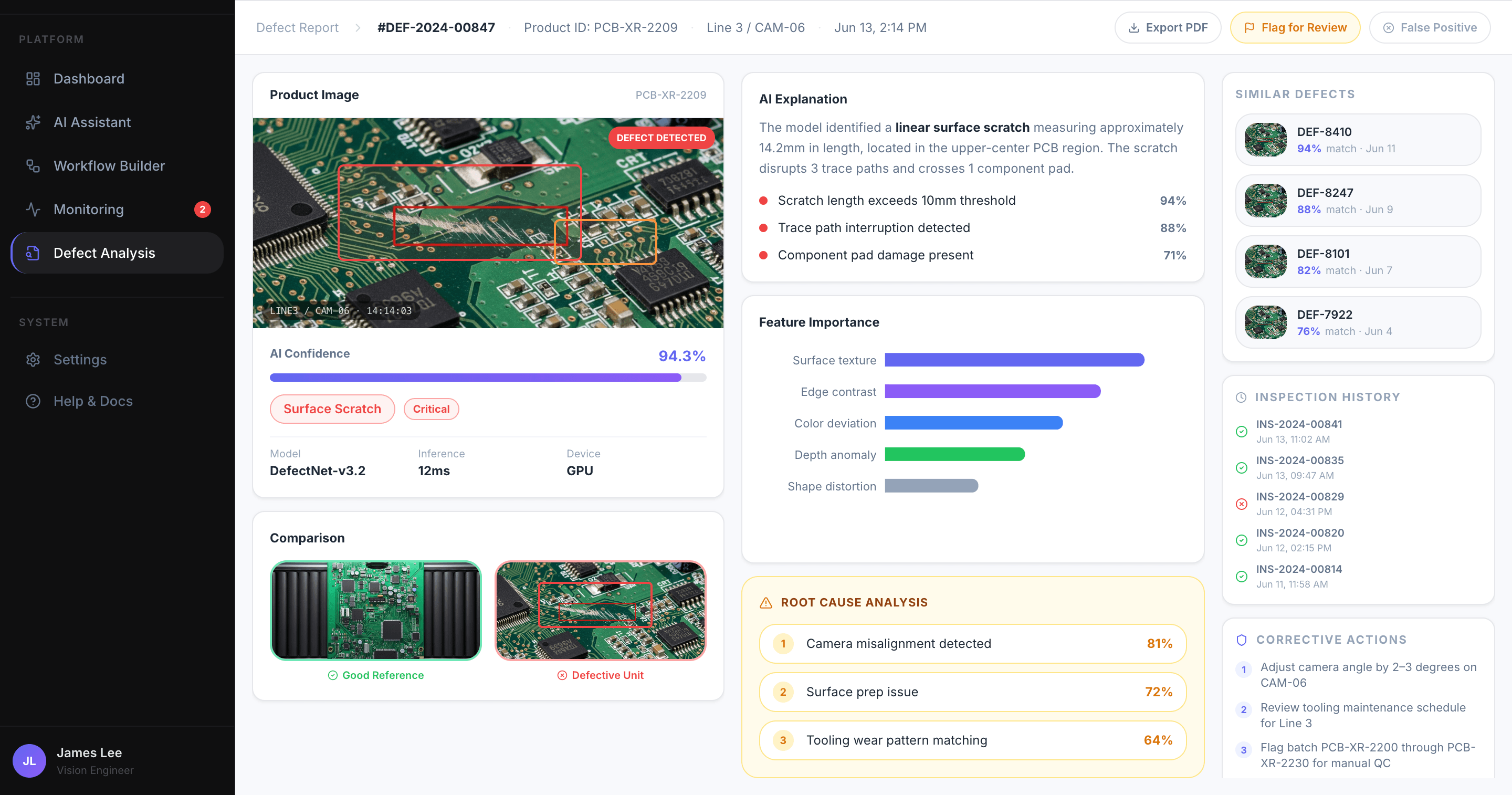
- Workflow troubleshooting with result explanations
- Confidence scoring and decision transparency
- AI-powered production insights and anomaly monitoring
- AI-assisted machine learning model selection based on inspection requirements, image quality, and expected defect types.
Design Evolution & Final Mockups
A few mockups showing the platform's interface.
Results & Impact
The project transformed a complex collection of engineering tools into a unified experience focused on user outcomes. By reducing navigation complexity, introducing AI-assisted workflows, and modernizing the user interface, the platform became easier to learn, faster to use, and more approachable for a broader range of users. One of the most valuable outcomes was shifting AI from being just another inspection technology to becoming an active assistant that supports users throughout the entire workflow.
Reduced the need to switch between multiple applications.
Simplified onboarding for new users.
Accelerated workflow creation through AI assistance.
Improved discoverability of advanced functionality.
Increased visibility into inspection performance.
Reduced cognitive load through a cleaner visual hierarchy.
Improved trust in AI-generated decisions through explainable results.
Created a scalable foundation for future AI-driven capabilities.
Better supported collaboration between engineers, operators, and quality teams.
Key Learnings & Reflection
Key Learnings
- The biggest user problems are often workflow problems rather than feature problems.
- AI is most valuable when it helps users make decisions rather than making decisions for them.
- Modernizing visual design can significantly improve usability in technical applications.
- Progressive disclosure helps manage complexity without removing power.
- Transparency is critical for building trust in AI systems.
- Different user groups require different levels of control and visibility.
- Great enterprise software should feel intuitive regardless of technical complexity.
- Designing around user goals leads to better outcomes than designing around technology.
Reflection
"This project challenged me to think beyond individual screens and features. What began as an exploration of machine vision software quickly became an exercise in simplifying complexity. The technical capabilities already existed. The real opportunity was creating a better experience around them. Looking back, the most meaningful design decision was treating AI as a partner rather than a feature. Instead of asking users to learn more tools, the platform helps guide them toward solutions. The project also reinforced my belief that industrial software doesn’t need to feel complicated. With the right information architecture, thoughtful interactions, and a clear visual hierarchy, even highly technical workflows can feel approachable, efficient, and enjoyable to use. For me, this project was not just about designing a machine vision platform. It was about reimagining how people interact with complex technology and making powerful tools feel accessible to everyone who depends on them."